This extraordinarily well preserved fossilized dinosaur nest will be auctioned in Los Angeles on Sunday. It is expected to fetch as much as U.S. $200,000.
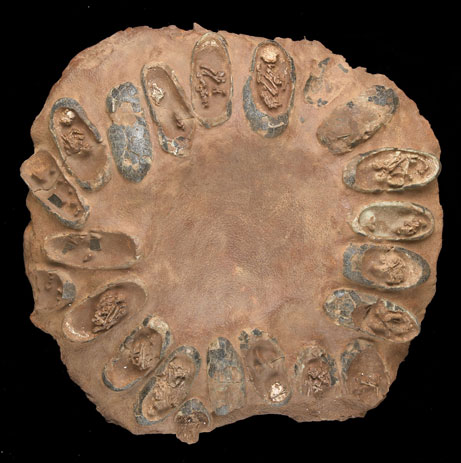
The fossil reveals 22 raptor eggs. Some are broken, allowing a glimpse of tiny dinosaur skeletons. The 65-million-year-old nest is encased in sandstone and contains ten complete embryos.The nest originated in China and has been in a private collection in Asia for much of the past 20 years. A research paper about the fossil is expected to be published in 2007. >>
Read more!
Posted by
FreshelStar
at
Sunday, December 03, 2006
This is a French rider Olivier Barcia practices riding his horse Emir et Djugut inside a giant plastic bubble in preparation for the grand opening of the Stockholm International Horse Show, Sweden.
The three-day indoor show is the biggest yearly event held at the Globe Arena in the Swedish capital, bringing in over 70,000 spectators.>>
Read more!
Posted by
FreshelStar
at
Sunday, December 03, 2006
Agorolob
An animal can walk on water a land in the phillipines its a delicacy it taste really good and they are hard to find there pretty expensive if you order one
Posted by
admin
at
Friday, December 01, 2006

U.S. companies will need to keep track of all the e-mails, instant messages and other electronic documents generated by their employees thanks to new federal rules that go into effect Friday, legal experts say.
The rules, approved by the Supreme Court in April, require companies and other entities involved in federal litigation to produce "electronically stored information" as part of the discovery process, when evidence is shared by both sides before a trial.
The change makes it more important for companies to know what electronic information they have and where. Under the new rules, an information technology employee who routinely copies over a backup computer tape could be committing the equivalent of "virtual shredding," said Alvin F. Lindsay, a partner at Hogan & Hartson LLP and expert on technology and litigation.
James Wright, director of electronic discovery at Halliburton Co., said that large companies are likely to face higher costs from organizing their data to comply with the rules. In addition to e-mail, companies will need to know about things more difficult to track, like digital photos of work sites on employee cell phones and information on removable memory cards, he said.
Both federal and state courts have increasingly been requiring the production of relevant electronic documents during discovery, but the new rules codify the practice, legal experts said.
The rules also require that lawyers provide information about where their clients' electronic data is stored and how accessible it is much earlier in a lawsuit than was previously the case.
There are hundreds of "e-discovery vendors" and these businesses raked in approximately $1.6 billion in 2006, Wright said. That figure could double in 2007, he added.
Another expense will likely stem from the additional time lawyers will have to spend reviewing electronic documents before turning them over to the other side. While the amount of data will be narrowed by electronic searches, some high-paid lawyers will still have to sift through casual e-mails about subjects like "office birthday parties in the pantry" in order to find information relevant to a particular case.
Martha Dawson, a partner at the Seattle-based law firm of Preston Gates & Ellis LLP who specializes in electronic discovery, said the burden of the new rules won't be that great.
Companies will not have to alter how they retain their electronic documents, she said, but will have to do an "inventory of their IT system" in order to know better where the documents are.
The new rules also provide better guidance on how electronic evidence is to be handled in federal litigation, including guidelines on how companies can seek exemptions from providing data that isn't "reasonably accessible," she said. This could actually reduce the burden of electronic discovery, she said.
Posted by
admin
at
Friday, December 01, 2006
A Thai Buddhist monk cut off his penis with a machete because he had an erection during meditation and declined to have it reattached, saying he had renounced all earthly cares, a doctor and a newspaper said on Wednesday.
The 35-year-old monk, whose name was withheld for privacy reasons, allowed medical staff at Maharaj hospital, 780 km (480 miles) south of Bangkok to dress his wound, but refused reattachment, hospital chief Prawing Euanontouch said.
"We cleaned up the wound, gave him some stitches, but he declined to have it reattached because he said had abandoned everything," Prawing told Reuters by telephone.
Prawing declined to comment on the monk's erection, which Bangkok-based Kom Chad Luk tabloid reported on its Web site.>
Read more!
Posted by
admin
at
Friday, December 01, 2006


Megan_Fox_6+copy.jpg)